No. 02
Recycling first, and why
Why plastic and e-waste come before everything else: a failed prototype should cost nothing, and our waste shouldn't need a truck.
We had to pick one thing to do first. Repair café, conservation sensors, kits for schools, the channel: all of them matter. We picked recycling, and this post is the reasoning, because in six months it should still make sense.
A failed prototype should cost nothing
Most of what we build will fail at least once. An enclosure that doesn’t fit. A bracket that snaps. A motor that’s too weak. If every failure means buying new plastic and ordering a part that takes six weeks, you start being careful in the wrong way. You stop trying things.
If the plastic comes from bottles and print waste, and the stepper motor comes from a dead printer, a failure costs an afternoon. Iteration stops being a money decision. That is the whole argument, really: recycling first brings the cost of prototyping close to zero, and everything else gets faster.
And the plastic leaves anyway
The second reason is local. Plastic waste leaves the Peninsula on a truck, to be dealt with elsewhere, if at all. Some of it could stay here and become something useful: filament, sheets, moulded parts, a spare knob for a neighbour’s radio. Not all of it. We are not going to solve waste on Banks Peninsula with a garage and a shredder. But we can show what a small place can do with its own stream, and publish how.
One front door for everything
Over the last two days the plan changed shape. Instead of one machine per material, there is now one universal recycler: a single front end for household plastic and e-waste.
- Intake. Every item is photographed, identified and given a label. Batteries come out at the door, before anything else, into a steel tin of sand that leaves the site every evening.
- Questions at the bench. Fifteen of them. “I don’t know” counts as a hazard. The gate fails closed.
- Separation. Magnets for steel, air for film and labels, water for floaters and sinkers, and later, light.
- Clean streams. Only clean, sorted, known material goes on to be shredded, melted or pressed.
The idea is that clean, sorted feedstock makes every machine after it simpler. A sheet press that only ever sees HDPE is a much easier machine than one that has to cope with anything.
The rules that keep it from becoming a hoard
A recycling workshop without rules turns into a pile, and a pile fills a small cottage in a few months. So:
- Nothing comes in without a row in the inventory. If it isn’t worth 30 seconds to record, it isn’t worth keeping.
- Fixed bins per category. Full means something leaves before something comes in.
- Hazards never stay. Batteries, lamps, big capacitors, refrigerant.
- No PVC, ever. Nothing unknown gets heated. That is why the plastic scanner, Le Nez, is near the top of the list: it is the safety gate before anything goes near heat.
- Weigh everything, in and out. That is the impact number, and we will publish it.
Honestly
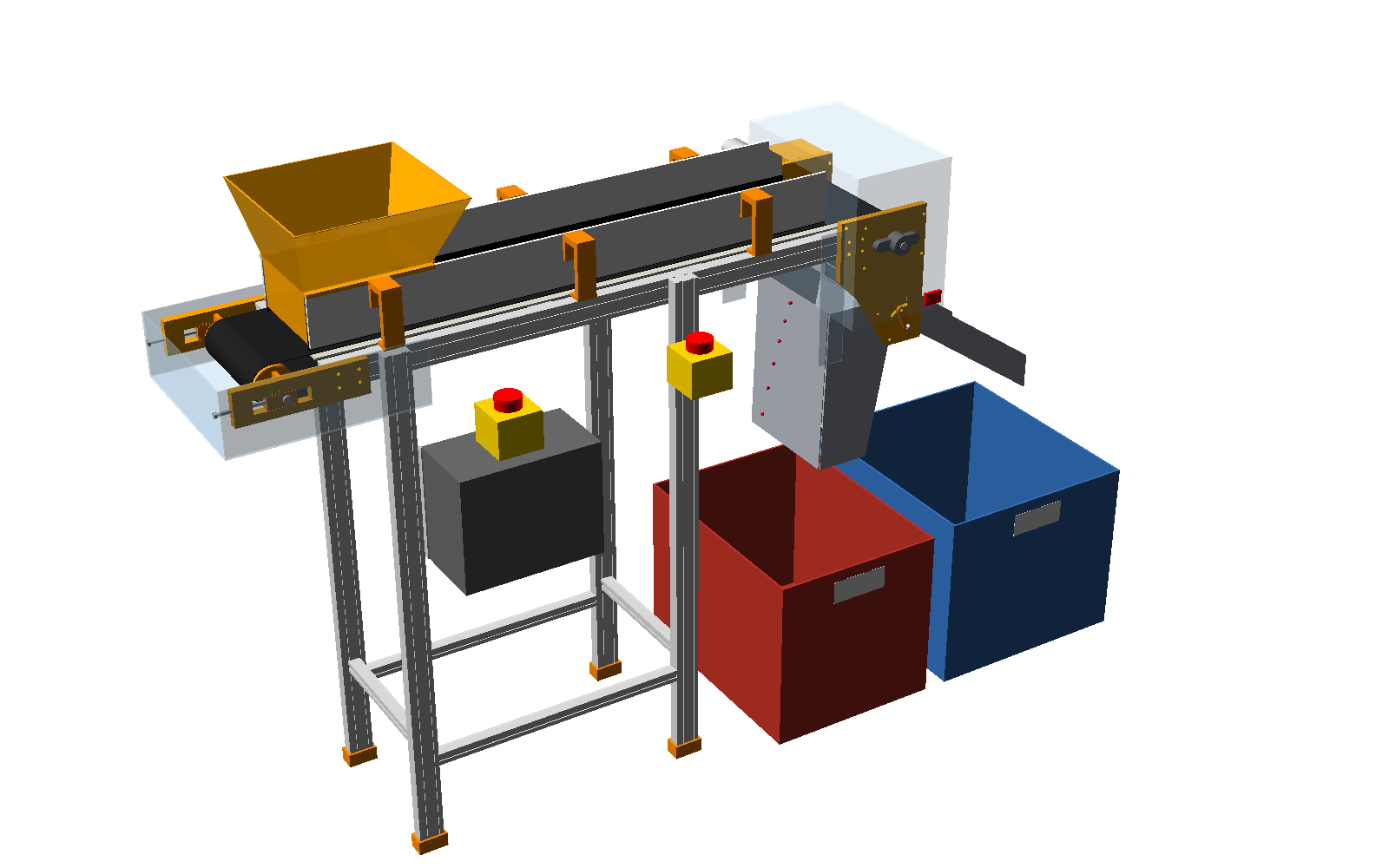
We drew a lot in two days. Intake station, magnet chute, sink-float tank, a small data app to log every item, a conveyor. Almost none of it exists yet. Some of it won’t be built for months, and some of it may turn out to be the wrong idea. The noisy, dusty machines (shredding, melting, pressing) will live in a garage, not in the cottage.
The first real test is smaller: a row of bins, a magnet, a bucket of salt water, and a notebook. If that doesn’t produce clean streams, nothing bigger will either.
Les plans sont gratuits — the plans are free.
End of entry No. 02, written .