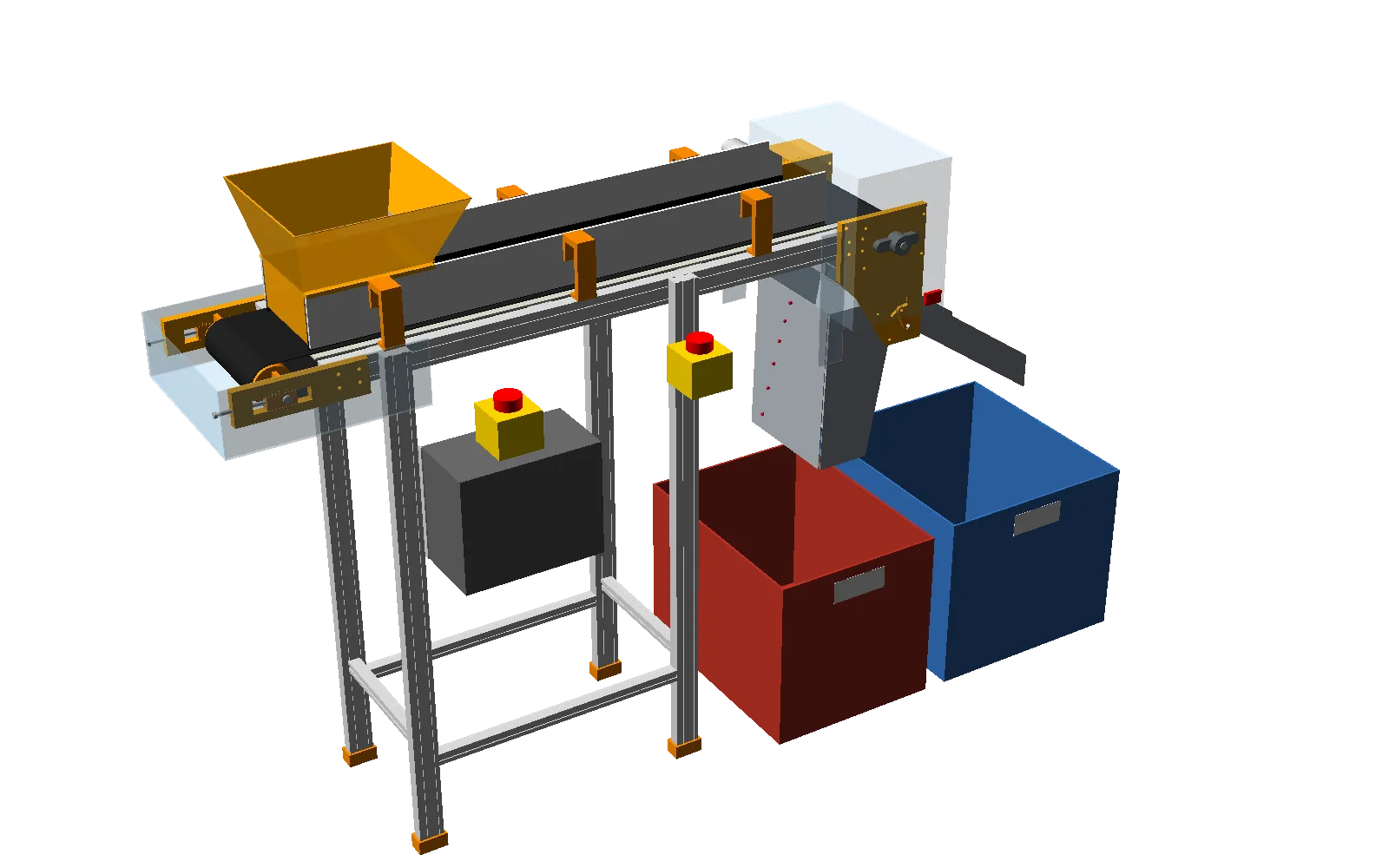
The universal recycler
One modular line for household waste and e-waste: identify it, take it apart, sort it by physics into clean streams, then make something new.
Architecture and most modules drawn. Nothing built yet beyond the first machines.
20 projects, 0 finished
Twenty projects, from a row of sorting bins to a wildlife camera. Each has an honest status and the very next step. Most are still on paper. Two are paused, and we say why. Nothing here is finished yet — when it is, the plans go online free.
20 on the board
12 projects
du déchet à la matière
Bottles, boxes, print waste and dead electronics turned back into useful material.
One modular line for household waste and e-waste: identify it, take it apart, sort it by physics into clean streams, then make something new.
Architecture and most modules drawn. Nothing built yet beyond the first machines.
Labelled bins by plastic type, weighed every week. The cheapest stage of all, and the one every machine depends on.
Planned. Bins and resin-code labels still to set up; the intake station design builds on it.
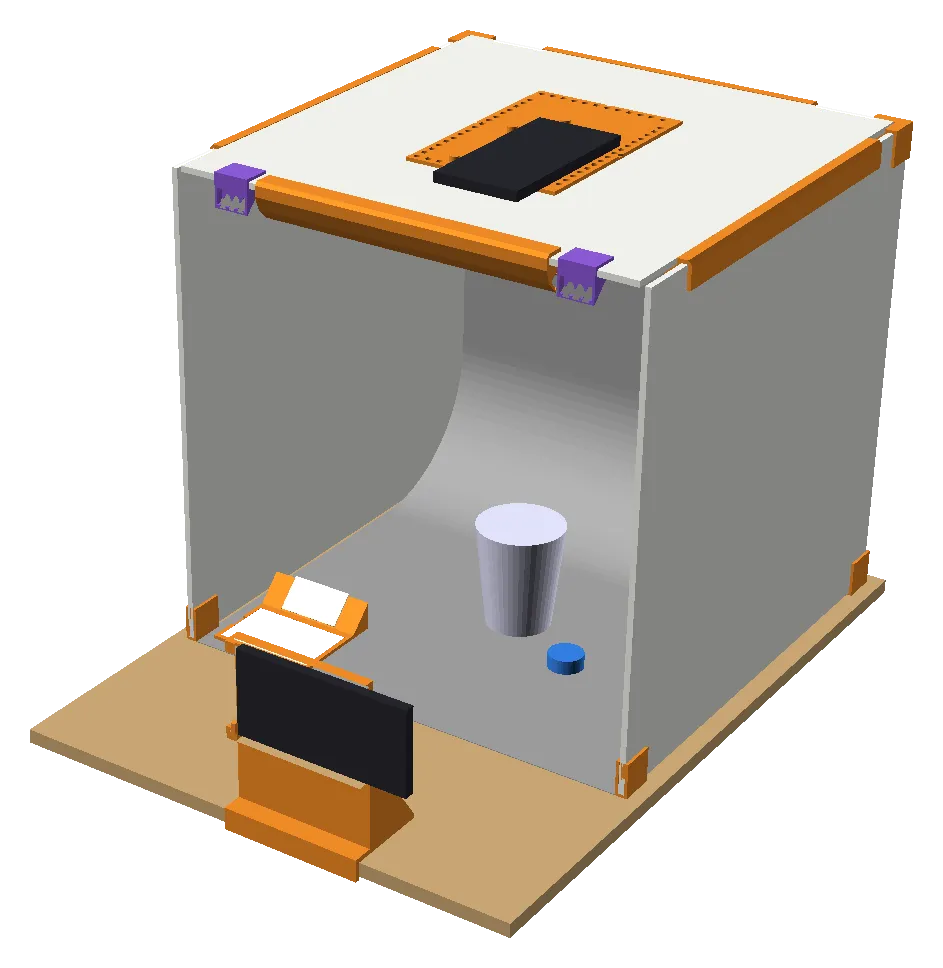
The front door of the recycler: batteries out at the doorway, a flat-pack photo booth, a weight, a label. Every item gets a record.
Procedure, booth and labels designed and rendered. Nothing printed or bought.
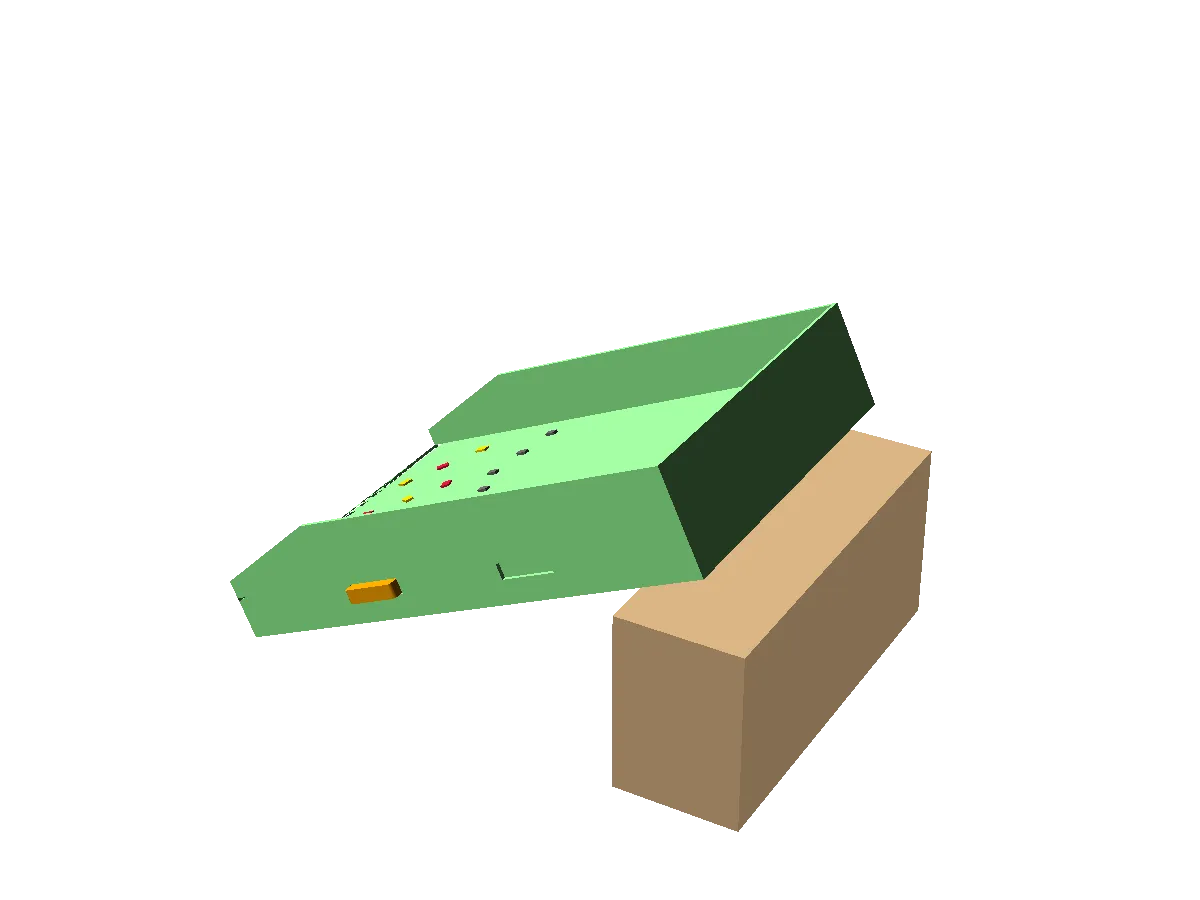
One printed magnet bar used three ways — chute, rake and wand — to pull screws, staples and springs out of shredded plastic.
Printed parts drawn and rendered. Nothing bought or printed yet.
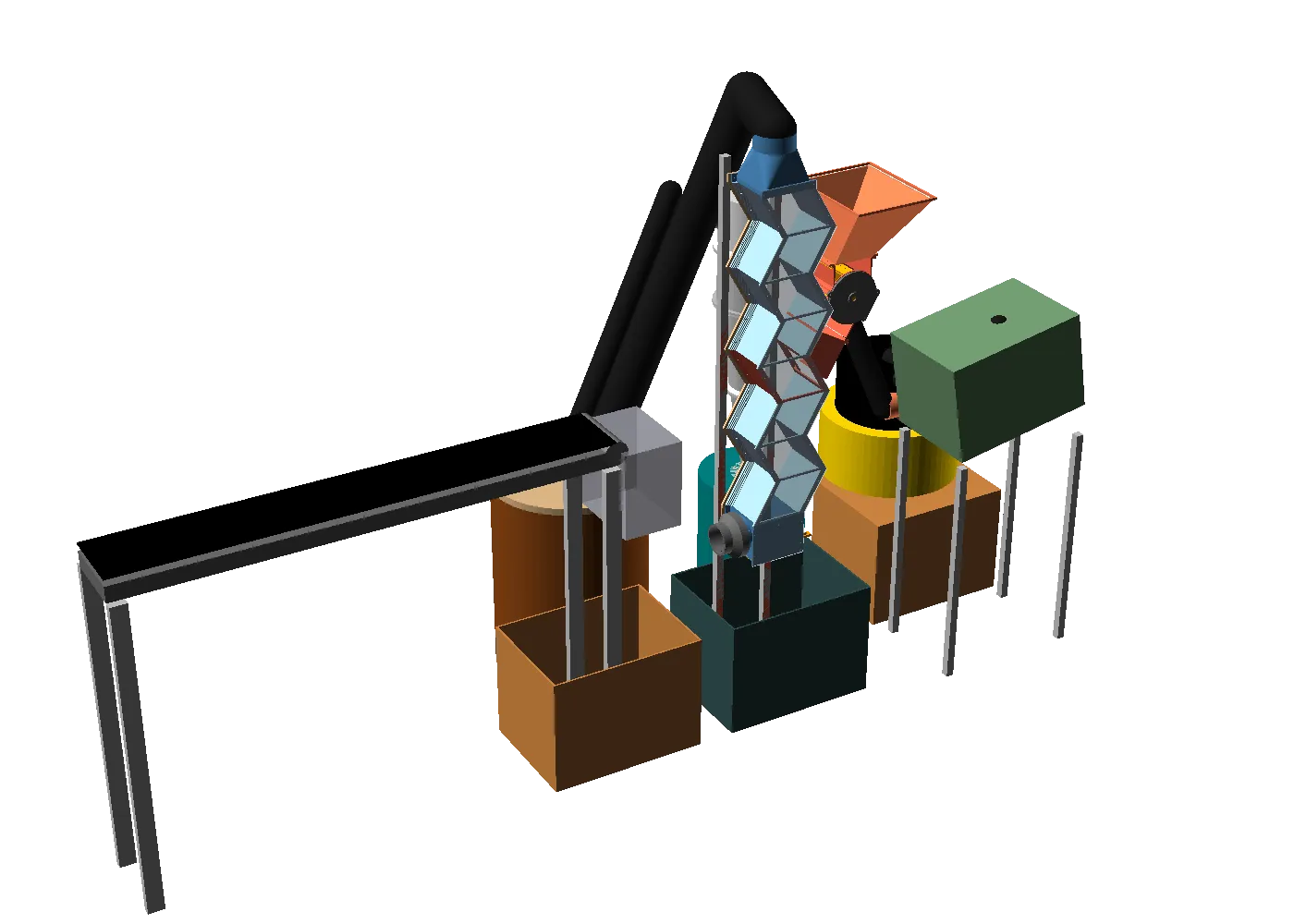
A printed zig-zag column on a salvaged shop-vac: rising air lifts paper, film and foam away from rigid plastic.
Physics, printed parts and test plan drafted. For 2027; nothing built.
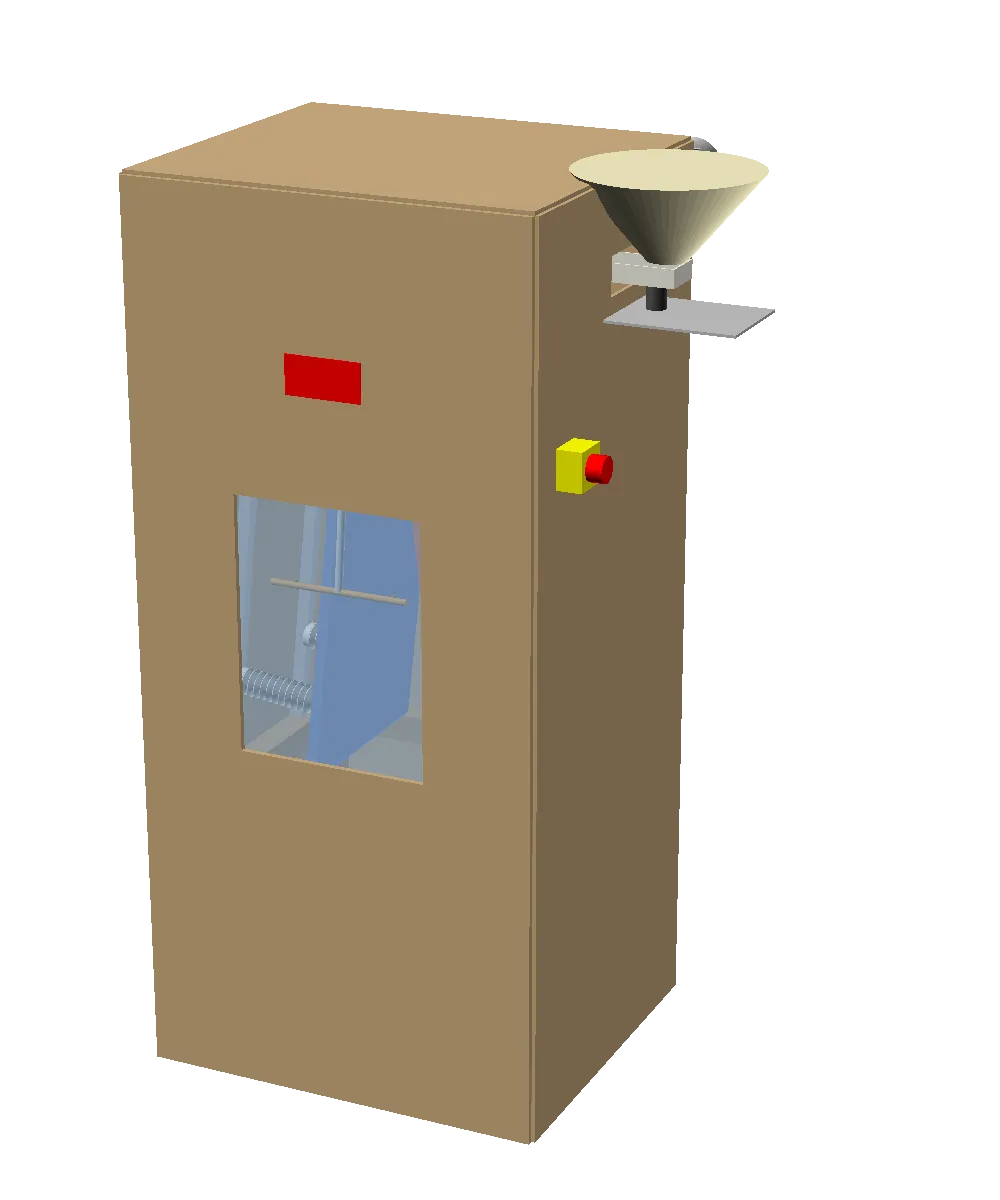
Tumbles mixed flakes to charge them, then lets them fall between charged plates: PET goes one way, PVC the other. Cold, no melting.
Physics model and design drafted for 2027. Nothing built.
A small machine that cuts a drink bottle into a ribbon and pulls it through a hot nozzle to make 3D-printer filament. Built from an old printer.
Print pack ready, donor printer inventoried. Hardware still to buy; no filament made yet.
A small scanner that shines infrared light on a piece of plastic and names the type, so PVC never reaches a hot machine.
Design and parts list done. Parts not ordered yet.
Delivery boxes become moulded pulp — jar cradles and seed paper — pressed on moulds printed from our own bottle filament.
Process and mould rules written. Starts once the bottle machine makes its first spool.
Failed prints and offcuts from our 3D printers are crushed and re-melted into new filament, closing the loop on the workshop's own plastic.
A desktop extruder and crusher are bought and expected mid-November 2026.
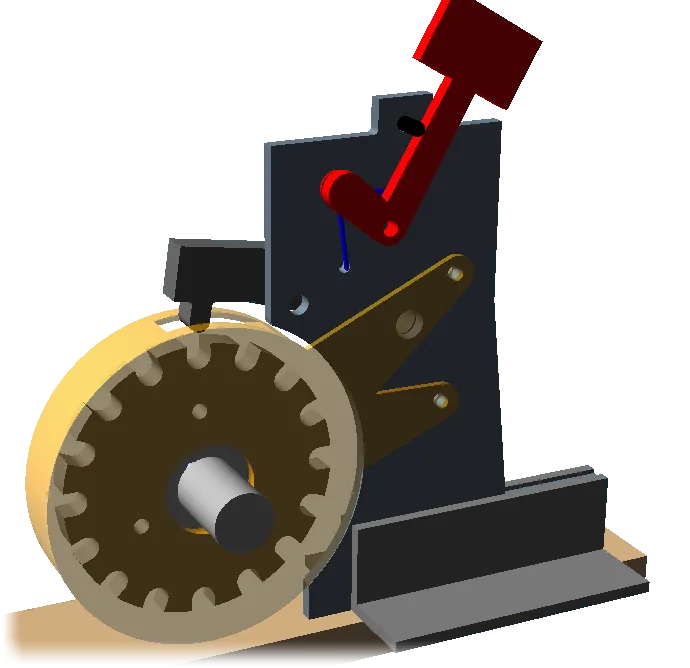
An open Precious Plastic shredder, built ourselves, to turn household plastics into flakes. Paused: a bought crusher handles print waste for now.
Paused on 15 October 2026. Design and safety work kept; nothing ordered.
Melts sorted HDPE and PP — mostly bottle caps — into flat, colourful sheets we can cut into tags, line winders and signs.
Planned for 2027. Collecting caps by colour in the meantime.
Nothing here yet at this level. That might be your project.
Request a project02 projects
réparé ici
A free Saturday session, once a month, to fix broken things together — and print the parts nobody sells.
A free monthly morning where neighbours bring broken things and fix them together. When a plastic part is missing, we measure it, model it and print it.
Planning. The first date is not set yet; it will be announced on the mailing list.
Every broken plastic part we model at the repair café becomes a free file, named by appliance make and model, for anyone to print.
Starts with the first repair café. No parts in the library yet.
Nothing here yet at this level. That might be your project.
Request a project02 projects
pour la presqu’île
Cheap, tough electronics for the people protecting Banks Peninsula wildlife.
A cheap solar box on a trap that tells volunteers when it has fired, so they walk to the traps that need them. Co-designed with trappers, or not built.
Idea only. We haven't talked with trappers yet — that is the first step.
A solar camera that recognises what walks past and sends back one line of data, not a thousand photos of grass. For predators and penguins.
A written proposal. No conversation with conservation groups yet.
Nothing here yet at this level. That might be your project.
Request a project02 projects
pour tous les âges
Every project at three levels, so the same work serves a nine-year-old and an engineer.
A small box that shows dust, CO2, temperature and humidity at a glance. The workshop's own safety instrument, and our first kit.
Parts list drafted. First prototype to be built on camera.
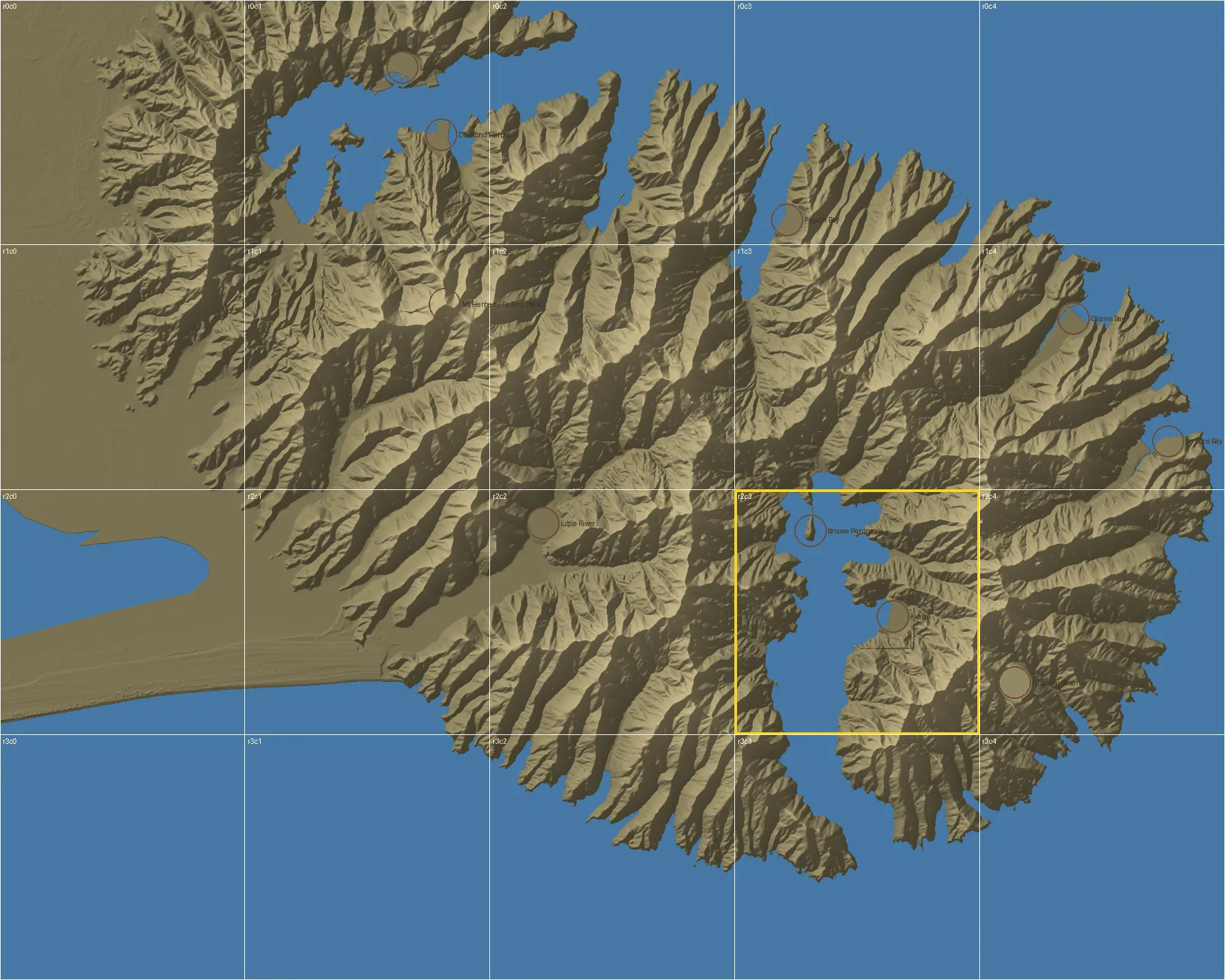
Two touchable 3D maps — all of Banks Peninsula and the Akaroa town centre — printed as tiles from open elevation data.
The map-making pipeline works and two test tiles are ready to print. Nothing printed yet.
Nothing here yet at this level. That might be your project.
Request a project02 projects
l’atelier
Fitting out an 1868 cottage without putting a single screw in its walls.
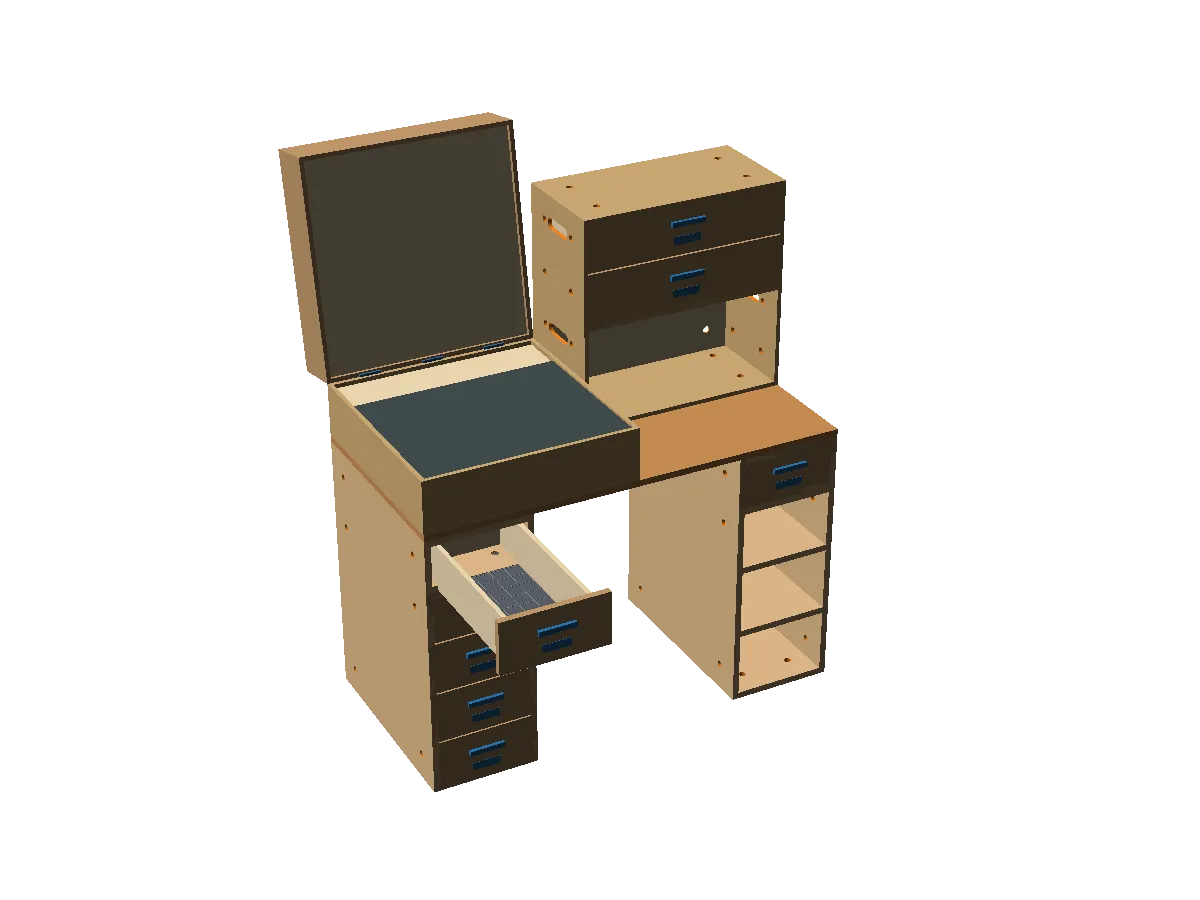
Open, modular plywood boxes on a 150 mm grid, joined by printed keys. Like Gridfinity, but for furniture — and nothing fixed to the walls.
Version 0.2 of the system drawn, with generated layouts and cutting lists. Nothing cut yet.
A phone video of a room or object becomes a measured 3D model, a mesh and a printable file. Built, then paused.
Paused on 21 October 2026. The processing software is built but not switched on.
Nothing here yet at this level. That might be your project.
Request a projectAnyone on the Peninsula can suggest something we could build or fix. If it repairs, reuses or protects something, it has a chance.